Avian Botulism and Sugar House Pond

What to do if you encounter sick birds
Avian botulism may be found in Sugar House Pond. Please do not handle sick or deceased birds. If you observe sick wildlife, the Utah Division of Wildlife Resources (DWR) has a list of wildlife rehabilitators, including those that may offer transportation services. https://wildlife.utah.gov/rehabilitators
If you see deceased wildlife in Sugar House Park, please report it to Salt Lake County Park Operations at 385‑468‑7275 or Salt Lake County Animal Services 24-hour dispatch at 801-840-4000.
What the public can do to help
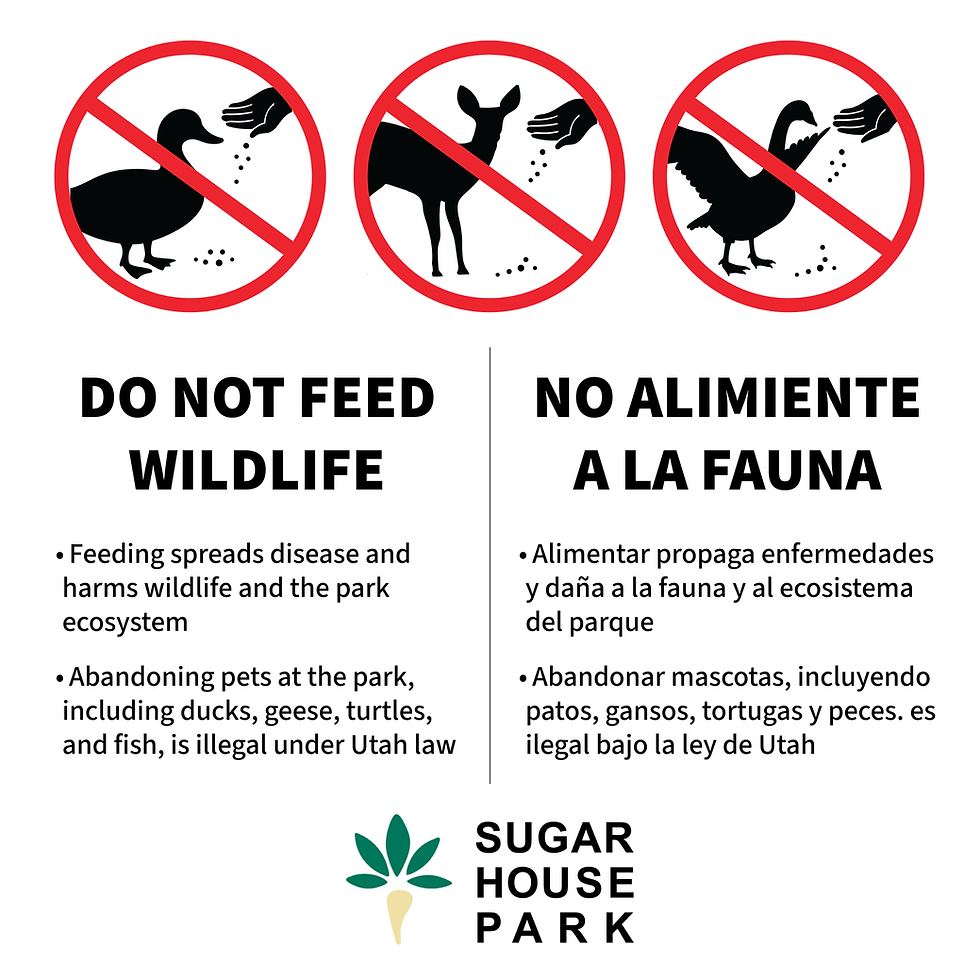
In addition to reporting sick or deceased wildlife, the most effective way visitors can help is by not feeding the ducks. Although well‑intended, feeding wildlife can lead to environmental imbalance, pollution, increased algae growth, and the spread of disease.
Salt Lake County Parks and Recreation and Sugar House Park
Salt Lake County Parks and Recreation’s primary role at Sugar House Park is to maintain the park’s facilities and grounds. We work to support a healthy park ecosystem and adapt our efforts based on environmental conditions. This summer’s record high temperatures and historically low water levels created challenges that required specialized attention.
Avian Botulism
While Salt Lake County Parks and Recreation works to maintain healthy ecosystems at our county parks and open spaces, the management and health of Utah's wildlife populations are managed by the Utah Division of Wildlife Resources (DWR). For questions specifically concerning avian botulism, seasonal outbreaks, or bird health, please refer to DWR, whose specialists have the scientific expertise to speak to these issues. Their website has a specific page dedicated to avian botulism and its regular occurrence in Utah: https://wildlife.utah.gov/diseases/avian-botulism
Salt Lake County Parks and Recreation does not partner directly with independent wildlife rescue groups. Any questions regarding wildlife rehabilitation protocols or community rescue efforts are best directed to the DWR.
Salt Lake County Parks and Recreation and Sugar House Park Pond
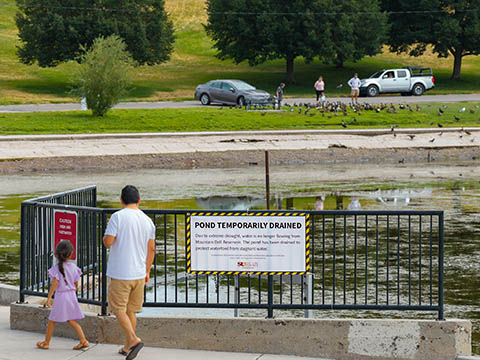
The County regularly monitors the pond alongside our Sugar House Park partners and stakeholders. This year, the drought resulted in extremely low inflow, creating stagnant water conditions. To encourage movement and support healthier water flow, the pond was drained, meaning we opened the outflow gate so water could move downstream. However, inflow remained exceptionally low, and stagnant water persisted. To further prevent stagnant water, temporary mechanical pumps were installed to keep water moving. The pumps move water downstream from the lowest part of the pond. This is a new, short‑term tactic, and we've seen improvements in water flow as a result. We will continue to evaluate this system while working closely with our partners on long‑term pond management.
Sugar House Park Pond Dredging
Sugar House Park Pond is a beloved park feature, but its fundamental purpose is flood control. Earlier this year, Salt Lake County Parks and Recreation partnered with Salt Lake County Flood Control on a dredging project. Dredging is a routine and necessary practice for flood control basins to reduce sediment buildup and to maximize carrying capacity during floods. The project allowed for deeper water levels.


Comments